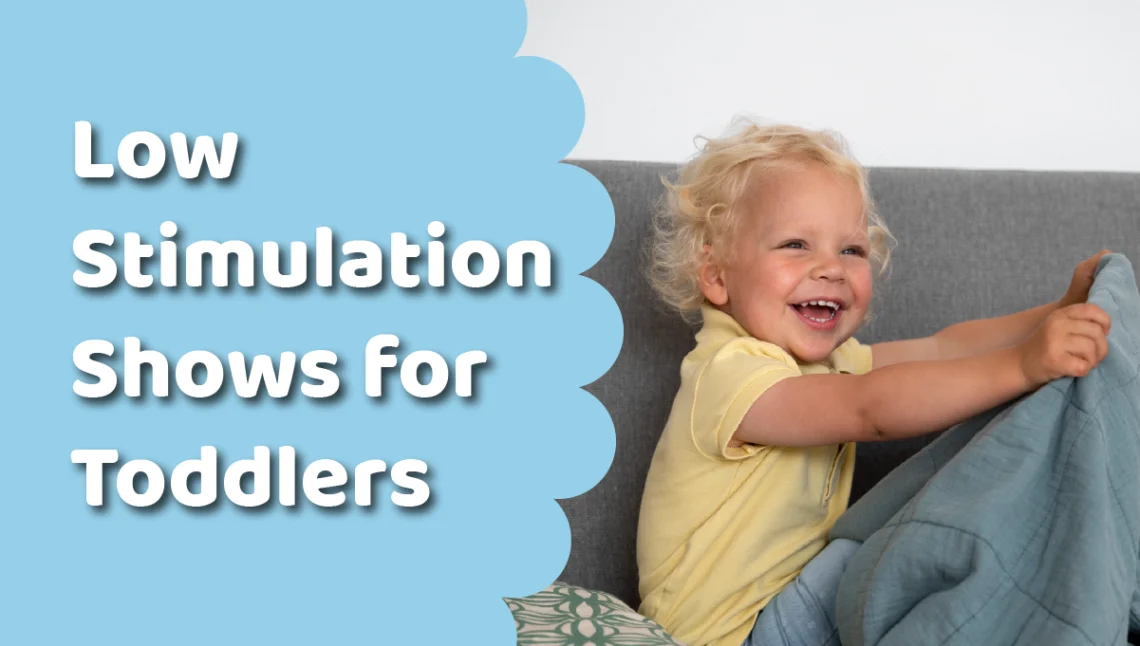
Best Low stimulation shows for toddlers are TV shows or videos that are designed to be calm, slow, and easy on a young child’s senses. They are the opposite of fast-paced, loud, flashy cartoons.
Think about it this way. When you walk into a quiet room with soft lighting and gentle music, you feel relaxed. When you walk into a room with bright flashing lights, loud music, and lots of people yelling — you feel overwhelmed. The same thing happens to toddlers when they watch TV.
A low stimulation show gives your toddler’s brain a chance to actually absorb and enjoy what they are watching, instead of just reacting to all the noise and movement.
These shows typically have:
- Soft, muted, or pastel colors
- Slow scene changes (not rapid-fire editing)
- Calm, quiet background music
- Simple storylines that are easy to follow
- Kind, gentle characters
- Predictable, repetitive themes that feel safe and familiar
- Gentle voice tones from characters and narrators
Why Are Low Stimulation Shows Good for Toddlers?
Toddlers are between the ages of 1 and 3. During this time, their brains are growing faster than at almost any other point in life.
Their nervous system is still developing. Their emotional regulation skills — the ability to manage feelings like frustration, excitement, and anger — are just beginning to form.
When a toddler watches a fast, overstimulating show, their nervous system can go into overdrive. This can cause:
- Meltdowns after screen time ends
- Difficulty falling asleep
- Short attention spans
- Increased aggression or hyperactivity
- Trouble with transitions (turning off the TV, moving to another activity)
The American Academy of Pediatrics (AAP) recommends that children under 18 months avoid screen time except for video chatting. For children aged 18 months to 2 years, they suggest only high-quality, slow-paced programming — and watching together with a parent. For ages 2 to 5, they recommend no more than one hour per day of quality programming.
Slow-paced shows for toddlers support healthy development by giving their brains time to process what they see. They also support language development, attention span growth, social-emotional learning, and imaginative play.
What Makes a Show Low-Stimulating? Key Features to Look For
Not every cartoon that seems “nice” is actually low stimulation. Here is what experts and pediatricians say to look for — and what to avoid.
Features of a Good Low Stimulation Show
| Feature | What It Looks Like |
|---|---|
| Slow pacing | Scenes last longer, no rapid cutting between shots |
| Soft colors | Pastel or muted tones, not neon or flashing |
| Gentle sounds | Soft music, quiet voices, no sudden loud noises |
| Simple story | One main idea per episode, easy to follow |
| Repetition | Same songs, same routines, comforting patterns |
| Kind characters | Characters solve problems peacefully and kindly |
| Predictable structure | Child always knows what comes next |
| Natural settings | Gardens, homes, outdoors — not chaotic urban scenes |
Warning Signs of an Overstimulating Show
| Warning Sign | Example |
|---|---|
| Very fast scene cuts | New camera angle every 1–2 seconds |
| Neon / flashing colors | Bright reds, greens, yellows flashing rapidly |
| Constant loud sound effects | “BOOM! CRASH! WOW! WOAH!” every few seconds |
| Multiple storylines at once | Too much happening at the same time |
| Characters shouting or yelling | High-energy, frantic delivery |
| No pauses or quiet moments | Non-stop action from start to finish |
| Overly fast music | High BPM, intense, no calm moments |
Low Stimulation vs. High Stimulation Shows — Side-by-Side Comparison
Many parents wonder: is the show my child loves actually okay? Here is a clear comparison of some popular shows:
| Show | Stimulation Level | Pacing | Colors | Best For |
|---|---|---|---|---|
| Mister Rogers’ Neighborhood | Very Low | Very Slow | Soft, warm | Ages 1–5 |
| Bluey | Low–Medium | Moderate | Warm, natural | Ages 2–5 |
| Sarah & Duck | Very Low | Very Slow | Pastel, muted | Ages 1–4 |
| Kipper the Dog | Very Low | Slow | Soft watercolor | Ages 1–3 |
| Trash Truck | Low | Slow | Natural tones | Ages 2–5 |
| Tumble Leaf | Very Low | Slow | Nature-inspired | Ages 1–4 |
| Postman Pat | Low | Slow | Soft, countryside | Ages 2–5 |
| Barney & Friends | Low | Slow | Warm, simple | Ages 1–4 |
| Sesame Street | Medium | Moderate | Varied | Ages 2–5 |
| Winnie the Pooh (90s) | Very Low | Very Slow | Soft, golden | Ages 1–5 |
| Peppa Pig | Medium | Moderate | Bright but simple | Ages 2–5 |
| CoComelon | HIGH | Very Fast | Neon, flashing | Not recommended |
| Paw Patrol | Medium-High | Fast | Bright | Ages 3–5 only |
| Baby Shark (videos) | HIGH | Very Fast | Neon, flashing | Not recommended |
15 Best Low Stimulation Shows for Toddlers
Here are the 15 best gentle shows for toddlers — with details on why each one works, what age it suits best, and where you can find it.
1. Mister Rogers’ Neighborhood
Best for: Ages 1–5 | Where to watch: Amazon Prime Video, PBS Kids, YouTube
If there is one show that every child development expert agrees on, it is this one. Mister Rogers’ Neighborhood is the gold standard of calming, non-overstimulating shows for toddlers.
Fred Rogers speaks slowly and directly to children. He uses a warm, steady voice. Every episode follows the exact same predictable routine — he comes home, changes his sweater, feeds the fish, talks about a topic, and visits the Neighborhood of Make-Believe. That predictability is incredibly soothing for toddlers.
The pacing is extremely slow by modern standards, but that is exactly the point. Children are given time to think, feel, and absorb each moment. The show focuses heavily on emotional regulation, helping children understand and name their feelings. It builds empathy, social-emotional learning, and a sense of security.
There are no flashy effects, no sudden loud noises, no rapid edits. Just one kind man, talking gently to your child.
Why it’s low stimulation: Extremely slow pacing, warm muted colors, gentle voice, predictable structure, deep emotional content
2. Sarah & Duck
Best for: Ages 1–4 | Where to watch: Netflix, BBC iPlayer, YouTube
Sarah & Duck is a beautiful British animated show that feels like a quiet, lovely walk through a calm world. The main character, Sarah, is a curious 7-year-old who goes on gentle adventures with her best friend, a duck.
The animation style uses soft pastel colors and simple, watercolor-inspired backgrounds. The narrator speaks in a calm, warm, storytelling voice. Episodes are only around 7 minutes long, which is perfect for toddler attention spans.
There is no conflict, no drama, no loud action sequences. Just quiet curiosity, creativity, and kindness. Children with sensory sensitivities especially love this show because it never feels overwhelming.
Why it’s low stimulation: Soft pastel palette, quiet narrator, very gentle storylines, no conflict or sudden sounds
3. Bluey
Best for: Ages 2–5 | Where to watch: Disney+, ABC iView
Bluey has become one of the most loved toddler shows in the world — and for good reason. The Australian animated series follows Bluey, a 6-year-old Blue Heeler puppy, and her family as they play games and navigate everyday life.
While Bluey is slightly more energetic than some shows on this list, it is still considered a low stimulation show for toddlers compared to most modern cartoons. The pacing is moderate, the colors are warm and natural, and the storylines are simple and relatable. Each episode explores one main idea, like dealing with losing a game, feeling left out, or using imagination.
What makes Bluey special is its emotional depth. It models healthy family dynamics, emotional regulation, and problem-solving in a beautifully gentle way. Parents love it as much as kids do.
Why it’s low stimulation: Natural warm colors, relatable calm storylines, strong emotional intelligence themes, moderate pacing
4. Kipper the Dog
Best for: Ages 1–3 | Where to watch: YouTube, Amazon Prime Video
Kipper the Dog is one of the most underrated non-overstimulating shows for toddlers and it deserves far more attention. This classic British animated series from the 1990s features a gentle, friendly dog named Kipper and his simple, everyday adventures.
The animation uses soft, watercolor-style colors. The pace is extremely slow — almost dreamily slow. Characters move slowly, speak quietly, and the whole show has a peaceful, unhurried feel. There is no conflict, no yelling, no action sequences. Just Kipper playing in the garden, spending time with friends, and exploring small, simple things.
For very young toddlers aged 1 to 3, this is one of the best choices available. It is almost meditative in its quietness.
Why it’s low stimulation: Watercolor-soft visuals, extremely slow pacing, zero conflict, very gentle audio
5. Trash Truck
Best for: Ages 2–5 | Where to watch: Netflix
Trash Truck is a wonderful Netflix original that does not get nearly enough attention. It follows Hank, a young boy who is best friends with a garbage truck. Yes, really — and it is absolutely charming.
The show uses warm, natural color tones and a slow, easy-going pace. Each episode follows Hank and his Trash Truck going on a simple adventure or learning something new about the world around them. The storytelling is sweet, kind, and never dramatic.
One of the best things about Trash Truck is how it celebrates curiosity and friendship. It encourages children to ask questions and find wonder in everyday things — like how recycling works or what happens at a farm.
Why it’s low stimulation: Warm natural colors, slow pacing, gentle curiosity-based stories, no conflict or sudden sounds
6. Tumble Leaf
Best for: Ages 1–4 | Where to watch: Amazon Prime Video
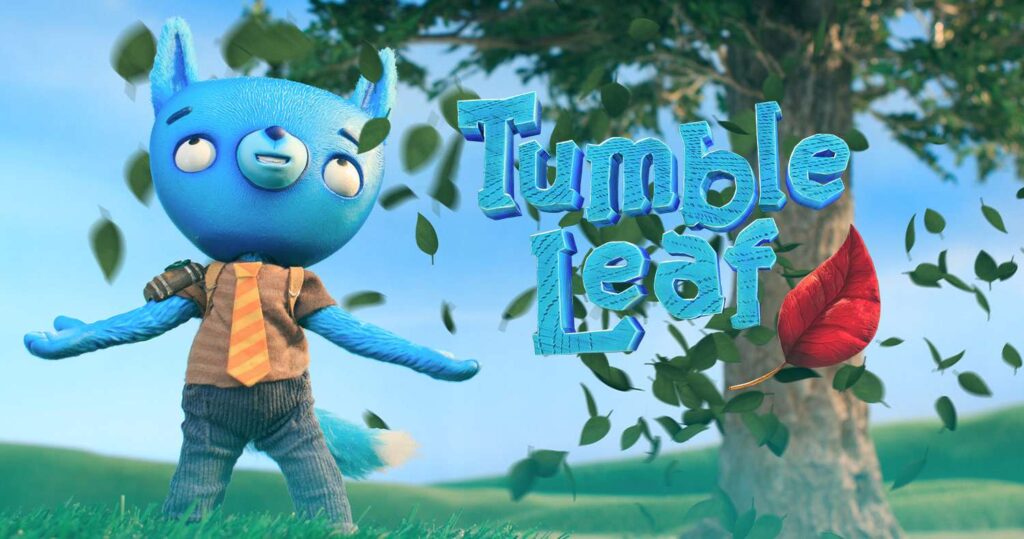
Tumble Leaf is a gorgeous Amazon original that feels like a nature walk in animated form. The show follows Fig, a small blue fox, and his friend Hedge, a caterpillar, as they explore a lush, magical world made of natural textures — wood, fabric, leaves, and water.
The animation is stunning and soothing, inspired by stop-motion style. Colors are all nature-inspired — greens, blues, yellows, and browns. The pacing is gentle and unhurried. Fig finds objects and uses curiosity to explore them, modeling imagination and discovery.
This show is especially wonderful for toddlers who love the outdoors or nature. It supports cognitive development and imaginative play in a beautifully calm environment.
Why it’s low stimulation: Nature-inspired palette, stop-motion visual style, gentle curiosity-driven episodes, very slow pacing
7. Winnie the Pooh (1980s–90s Series)
Best for: Ages 1–5 | Where to watch: Disney+, YouTube
The original Winnie the Pooh animated series from the 1980s and 90s is a timeless, deeply soothing choice for toddlers. Based on A.A. Milne’s classic stories, it features Pooh, Piglet, Tigger, Eeyore, and friends in the gentle world of the Hundred Acre Wood.
The animation uses soft golden and earthy tones. The pacing is slow and warm. The stories are simple — finding honey, helping a friend, getting lost and found again. Characters speak gently. Even Tigger, the most energetic character, feels manageable compared to modern high-stimulation cartoons.
This is a show that parents and grandparents grew up with, and it holds up beautifully. It is calming, emotionally rich, and full of warmth.
Why it’s low stimulation: Golden soft color palette, slow storytelling, gentle characters, emotional warmth
8. Postman Pat
Best for: Ages 2–5 | Where to watch: YouTube, BritBox
Postman Pat is a beloved classic British show featuring Pat Clifton, a friendly postman, and his black-and-white cat Jess as they deliver mail through the quiet countryside village of Greendale.
This show is all about community, kindness, and everyday life. The pace is slow and peaceful. The setting — rolling green hills, friendly village neighbors, a red post van — is warm and comforting. Each episode solves a simple problem in a gentle, non-dramatic way.
For children who enjoy stories set in real-world environments (rather than fantasy worlds), Postman Pat is a perfect fit. It builds a sense of community, helpfulness, and routine.
Why it’s low stimulation: Countryside setting, slow pacing, simple problem-solving, kind community-focused stories
9. Barney & Friends
Best for: Ages 1–4 | Where to watch: YouTube, Peacock
Barney & Friends is one of the most classic low stimulation shows for toddlers ever made. The big purple dinosaur and his friends use songs, stories, and simple activities to teach kindness, sharing, and basic concepts.
The show is very slow-paced. The songs are gentle and repetitive — which is exactly what toddlers love. Repetition helps young children build memory, language, and a sense of security. The set is simple. The characters are kind and consistent.
While some parents find Barney a bit old-fashioned, from a child development standpoint it is still one of the most appropriate choices for very young toddlers.
Why it’s low stimulation: Slow repetitive songs, simple set, gentle characters, predictable format
10. Sesame Street
Best for: Ages 2–5 | Where to watch: HBO Max, PBS Kids, YouTube
Sesame Street is one of the most researched and tested children’s shows in history. It is backed by decades of child development science. The show teaches letters, numbers, kindness, and social skills through a mix of Muppet segments, animation, and real-life stories.
It is slightly more varied in pacing than other shows on this list, but it is still a much calmer, more purposeful choice than most modern cartoons. The segments are short, structured, and always educational. Elmo’s World, in particular, is a very gentle, slow-paced segment perfect for very young toddlers.
Why it’s low stimulation: Educational structure, warm characters, backed by child development research, moderate pacing
11. The World of David the Gnome
Best for: Ages 2–5 | Where to watch: YouTube
This quiet gem from the 1980s is based on a Dutch book series. David is a small gnome who lives in the forest and helps animals and people in need. The animation is soft and hand-drawn. The narration is calm and storytelling in style.
It is an incredibly peaceful show that moves slowly through nature, kindness, and gentle problem-solving. It is also a wonderful show for introducing children to the concept of nature and caring for animals.
Why it’s low stimulation: Hand-drawn soft animation, nature setting, very gentle narration, zero conflict
12. Puffin Rock
Best for: Ages 1–4 | Where to watch: Netflix
Puffin Rock is a stunning Netflix nature show narrated by Chris O’Dowd. It follows Oona, a young puffin, and her brother Baba as they explore the beautiful rocky island they live on.
The visuals are real-life wildlife footage — breathtakingly beautiful and incredibly calm. The narration is warm, gentle, and softly humorous. Each episode is only around 5–7 minutes long.
This is one of the best soothing shows for toddlers because it literally uses nature footage. There is nothing more calming than watching real baby animals in a peaceful seaside setting with a gentle narrator.
Why it’s low stimulation: Real nature footage, very soft narration, short episodes, no conflict or drama
13. Hey Arnold!
Best for: Ages 3–5 | Where to watch: Paramount+, YouTube
Hey Arnold! follows a city boy named Arnold and his friends and neighbors in a big urban neighborhood. The show has a very laid-back, realistic tone compared to most cartoons. The stories deal with everyday life — friendship, family, being kind to strangers, and solving problems peacefully.
The pacing is moderate and the animation style is warm and hand-drawn. It is a good choice for slightly older toddlers approaching age 3–5 who are ready for slightly more complex storylines.
Why it’s low stimulation: Realistic, everyday themes, warm animation, moderate pacing, kind characters
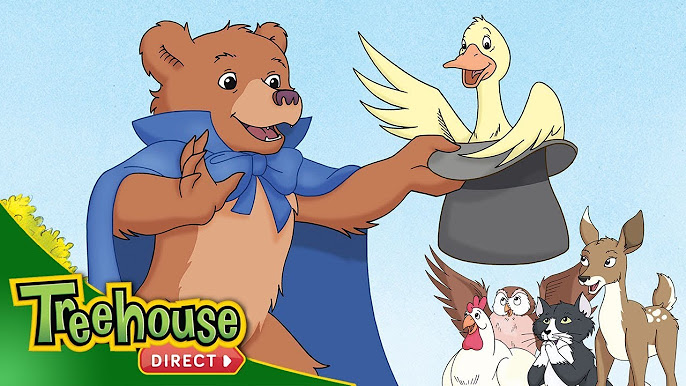
14. Little Bear
Best for: Ages 1–4 | Where to watch: YouTube, Paramount+
Little Bear is a beautifully gentle Canadian animated series based on the classic books by Else Holmelund Minarik. It follows Little Bear and his friends in simple, quiet adventures in a woodland setting.
The animation is soft and watercolor-like. The tone is warm and unhurried. Stories are simple — playing in the rain, visiting grandmother, imagining adventures. It is one of the most perfectly calm shows ever made for young children.
Why it’s low stimulation: Soft watercolor animation, extremely slow pace, simple woodland stories, gentle characters
15. Bananas in Pyjamas
Best for: Ages 1–3 | Where to watch: YouTube
This classic Australian show features two large bananas, B1 and B2, who live in Cuddles Avenue and spend their days playing, helping neighbors, and going on gentle adventures. The repetitive catchphrases, simple sets, and predictable structure make it deeply soothing for very young toddlers.
Why it’s low stimulation: Highly repetitive and predictable, very simple format, gentle characters, calm setting
Age-by-Age Guide — Best Shows for Each Toddler Stage
One thing most competitor sites miss completely is this: not all toddlers are the same. A show perfect for a 3-year-old may be too fast for a 1-year-old. Here is your guide:
| Age | Best Picks | Why |
|---|---|---|
| 12–18 months | Kipper the Dog, Sarah & Duck, Puffin Rock | Very slow, soft colors, short episodes |
| 18 months – 2 years | Tumble Leaf, Little Bear, Winnie the Pooh | Simple stories, gentle pacing, nature themes |
| 2–3 years | Mister Rogers, Bluey, Barney, Bananas in Pyjamas | More language, emotional learning, routine |
| 3–5 years | Sesame Street, Postman Pat, Trash Truck, Hey Arnold! | Slightly more complex stories, community themes |
Best Low Stimulation Shows for Bedtime Wind-Down
This is another gap that most other sites don’t cover. Bedtime is a special situation. You want shows that actively help your child’s nervous system slow down before sleep. Here are the top picks specifically for that:
| Show | Why It Works for Bedtime |
|---|---|
| Sarah & Duck | Very quiet, short, pastel colors calm the eyes |
| Kipper the Dog | Dreamily slow, almost meditative |
| Puffin Rock | Nature sounds, soft narration, very peaceful |
| Winnie the Pooh (90s) | Warm golden tones, slow storytelling, cozy feel |
| Little Bear | Watercolor softness, very slow, gentle stories |
Tip: Keep bedtime screen time to 20–30 minutes maximum, and follow it with a quiet activity like reading or cuddling before sleep. Screens emit blue light which can interfere with melatonin, so dim the device brightness before bedtime viewing.
Best Shows for Sensory-Sensitive Toddlers
If your child has sensory processing differences, is on the autism spectrum, or has been identified as highly sensitive, you need to be even more thoughtful about screen choices. Here are the best options:
| Show | Why It Works for Sensitive Children |
|---|---|
| Sarah & Duck | Near-silent episodes, no surprises, ultra-soft visuals |
| Kipper the Dog | No sudden sounds or movements, extremely predictable |
| Tumble Leaf | Nature textures and tones, no drama, completely calm |
| Puffin Rock | Real nature, nothing artificial or jarring |
| Mister Rogers | Predictable routine every episode, emotional safety |
Key things to look for if your child is sensory-sensitive:
- No sudden loud sounds or “jump scare” moments
- Highly predictable episode structure
- Soft, muted, non-neon color palette
- Very slow scene transitions
- No background crowds or lots of voices at once
Many speech therapists and occupational therapists recommend shows like Mister Rogers and Sarah & Duck specifically for children with speech delay or sensory processing differences, because the slow pacing gives children more time to process language.
What to Avoid — Shows That Are Too Overstimulating
Most sites won’t name names, but you deserve honest information. Here are shows that many child development experts consider high-stimulation and potentially problematic for very young toddlers:
| Show | Why It May Be Overstimulating |
|---|---|
| CoComelon | Extremely fast edits, neon colors, constant high-energy music |
| Baby Shark (videos) | Flashing lights, high-speed cuts, looping high-pitched sounds |
| Paw Patrol | Fast action sequences, loud sounds, intense scenes |
| Peppa Pig | Can be okay in small doses but pacing is faster than ideal |
| PJ Masks | Action-heavy, fast cuts, dramatic tension |
| Most YouTube Kids videos | Highly variable quality, many are very high stimulation |
Note: This does not mean your child will be harmed by watching these shows occasionally. But if your toddler is having meltdowns after screen time, trouble sleeping, or showing signs of overstimulation, switching to lower-stimulation options often makes a real difference.
Tips for Healthy, Mindful Screen Time with Toddlers
Even the most low-stimulating TV shows for toddlers are best enjoyed as part of a balanced, intentional approach to screen time. Here are the most important tips:
Follow AAP Guidelines. The American Academy of Pediatrics recommends no screen time for children under 18 months (except video calls), and no more than 1 hour per day for children aged 2–5.
Watch together when you can. Co-viewing — watching with your child — dramatically increases the educational value of any show. Talk about what you see, ask questions, and make connections to real life.
Use screen time intentionally. Use it as a wind-down tool, not a babysitter. Pick a specific time (after lunch, before dinner) and stick to it consistently.
Watch what comes after screen time. If your child is consistently cranky, emotional, or hard to manage after watching, that is a sign the show may be too stimulating.
Keep episodes short. Even the best shows should be limited. Aim for 1–2 episodes at a time, not marathon viewing sessions.
Create a transition routine. Give a 5-minute warning before turning off the TV. Use the same words every time: “Five more minutes, then we turn off the TV and do X.” This reduces meltdowns.
Balance with non-screen activities. Outdoor play, reading, pretend play, sensory activities, and creative play are all essential for healthy toddler development. Screen time should supplement — not replace — these.
Frequently Asked Questions
Is Bluey a low stimulation show for toddlers?
Yes, Bluey is considered a relatively low stimulation show, especially compared to most modern cartoons. It has warm, natural colors and emotionally intelligent storylines.
The pacing is moderate — not as slow as Kipper or Sarah & Duck, but much calmer than high-stimulation shows like CoComelon or Paw Patrol. It is a great choice for toddlers aged 2 and up.
Is CoComelon bad for toddlers?
Many pediatricians and child development experts have raised concerns about CoComelon’s very fast pacing, neon colors, and rapid scene edits.
Some studies suggest that fast-paced media can shorten attention spans in young children. It is not “banned” or officially declared harmful, but most experts recommend opting for slower-paced shows, especially for children under 2.
What is the calmest TV show for a 1-year-old?
For a 1-year-old, the calmest choices are Kipper the Dog, Sarah & Duck, Puffin Rock, and Little Bear. These have the slowest pacing, softest colors, and shortest episode lengths — ideal for very young toddlers.
How much TV is okay for a toddler?
The American Academy of Pediatrics recommends zero screen time for children under 18 months (except video chatting), and a maximum of 1 hour per day for children aged 2–5. Always prioritize quality over quantity.
Can TV shows help toddlers with speech development?
Slow-paced, language-rich shows like Mister Rogers’ Neighborhood, Sesame Street, and Sarah & Duck can support language development when watched with a parent. Co-viewing and talking about what you see is far more beneficial than passive watching alone.
Are there low stimulation shows on Netflix for toddlers?
Yes. Netflix has some great options including Trash Truck, Puffin Rock, Sarah & Duck (in some regions), and Tumble Leaf. These are all slow-paced, gentle, and appropriate for toddlers.
What should I do if my toddler only wants to watch overstimulating shows?
Start by slowly introducing one calm show at a time. Sit and watch it with them, making it fun and interactive. Children often prefer what they are used to, but with gentle, consistent exposure, most will come to love calmer shows — especially when a parent makes the watching experience warm and engaged.
Final Thoughts
Choosing the right shows for your toddler is one of the simplest and most powerful things you can do to support their development and emotional wellbeing.
The best low stimulation shows for toddlers are not boring — they are rich, meaningful, and deeply good for growing minds.
Shows like Mister Rogers, Sarah & Duck, Kipper the Dog, and Tumble Leaf give your child something precious: space to think, feel, and imagine without being overwhelmed.
You do not have to cut out screen time entirely. You just have to be intentional about what fills those minutes. Start with one show from this list this week. Notice how your child responds — how calm they are during watching, and how smoothly screen time ends.
Small changes make a big difference. And your child’s calm, healthy developing brain is absolutely worth it.