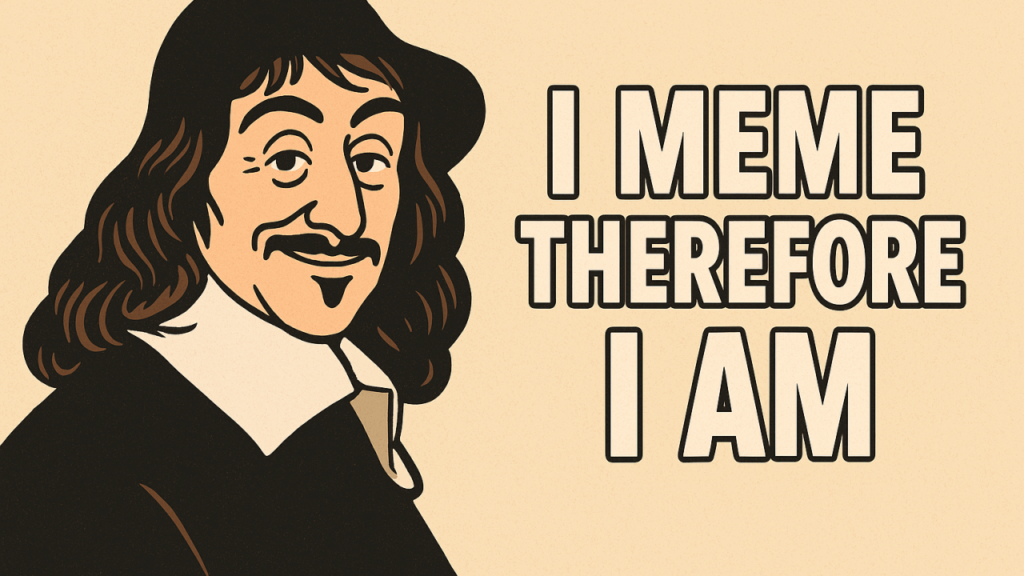
The “I think therefore I am meme“ has taken over the internet, turning a 400-year-old philosophy quote into one of the funniest and most relatable jokes online. If you’ve ever seen a confused cat, a stoner having an existential crisis, or someone overthinking their entire existence in meme format, you’ve witnessed René Descartes’ famous philosophical statement become internet gold.
But what does “I think therefore I am” actually mean? Why did this particular philosophy quote become such a popular meme? And how can you use it to make your friends laugh (or question their existence)?
In this complete guide, we’ll explain everything about the cogito ergo sum meme, break down why it went viral, show you all the popular formats, and help you understand the real philosophy behind the joke. Whether you’re here for the memes or the meaning, you’re about to discover why this simple statement became one of philosophy’s greatest contributions to internet culture.
What Does “I Think Therefore I Am” Actually Mean?
The Simple Explanation
Let’s start with the basics. “I think, therefore I am” is the English translation of the Latin phrase “cogito ergo sum.” French philosopher René Descartes came up with this statement in the 1600s, and it’s actually way simpler than it sounds.
Here’s what Descartes was saying: If you’re thinking about whether you exist, that very act of thinking proves you exist. You can’t think if you don’t exist, right? So the fact that you’re having thoughts means you must be real.
Think of it this way:
- You doubt everything around you? That’s thinking.
- You wonder if you’re real? That’s thinking.
- You question your existence? Still thinking.
- And if you’re thinking… boom! You exist.
The modern translation makes it even clearer: “I am thinking, therefore I exist.” It’s not about being smart or having deep thoughts. It’s simply about the act of consciousness itself being proof of your existence.
This philosophical statement became revolutionary because Descartes was searching for something he could be absolutely certain about. He could doubt his senses, doubt the physical world, even doubt mathematics. But he couldn’t doubt that he was doing the doubting. That made his existence the one certain foundation for all knowledge.
Why Descartes Said This
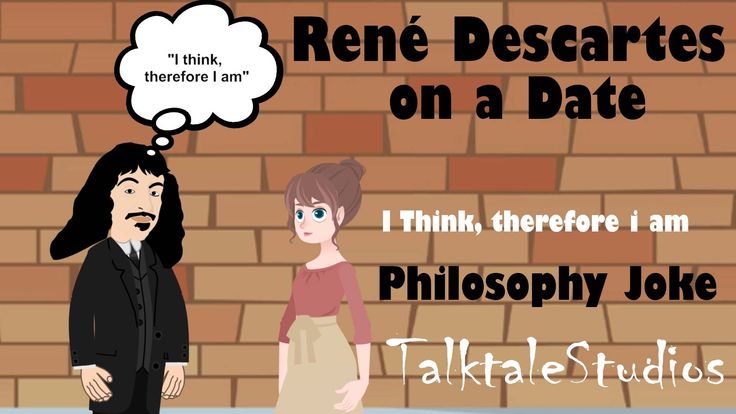
René Descartes wasn’t just sitting around making up random philosophy quotes. He was on a serious mission to find absolute certainty in a world full of doubt.
Picture this: It’s the 1640s in the Netherlands, and Descartes is having what we’d now call an existential crisis. He’s questioning everything. How do you know anything is real? How do you know you’re not dreaming right now? What if everything you see is just an illusion?
Descartes called this his “methodic doubt“ – basically, he decided to doubt everything he possibly could until he found something that was absolutely, 100% certain. Here’s what he doubted:
| What Descartes Doubted | Why He Doubted It |
|---|---|
| His five senses | Dreams feel real but aren’t |
| The physical world | Could all be an illusion |
| Mathematics | Maybe an evil demon is tricking him |
| Other people | Might not actually exist |
| His own body | Could be dreaming or hallucinating |
But when he got to “I think therefore I am,” Descartes hit the jackpot. Even if everything else was fake, even if some evil demon was deceiving him about literally everything, the act of being deceived meant he existed. You can’t trick something that doesn’t exist.
This Cartesian philosophy became the foundation of Western philosophy and changed how we think about consciousness, existence, and knowledge. Pretty heavy stuff for what’s now a meme about cats and stoners, right?
How Did This Become a Meme?
The Original Philosophy
Before we dive into the memes, let’s understand why this particular philosophical proposition was meme-worthy in the first place.
Descartes published his famous idea in two major works:
- “Discourse on the Method” (1637) – Where he first wrote “I think, therefore I am”
- “Meditations on First Philosophy” (1641) – Where he explored it more deeply
The cogito ergo sum (the fancy Latin name) was Descartes’ answer to radical doubt. He was basically asking: “What can I know for sure?” And his answer was: “At minimum, I know that I exist because I’m thinking about it.”
What made this statement special was its self-evident truth. Unlike other philosophical ideas that require complex proof, this one proves itself just by thinking it. The moment you question it, you’re proving it true. That’s pretty clever – and also pretty funny when you think about it.
Why It’s Perfect for Memes
So why did “I think therefore I am” become such a huge philosophy meme? Several reasons:
1. It’s Hilariously Relatable Everyone has those 3 AM thoughts where they suddenly question everything. “Am I real? Is anything real? What even is reality?” The consciousness meme captures that universal experience of overthinking and existential dread that hits at random moments.
2. It’s Perfectly Simple… And Complicated The statement is simple enough that anyone can understand it, but deep enough that you can spiral into hours of thought. This makes it perfect for both stoner philosophy memes and genuine philosophical humor.
3. It Works for Depression Humor Modern internet culture loves self-aware humor about mental health. The idea of constantly questioning your existence fits perfectly with depression memes and existential crisis content. It’s dark, it’s funny, and it’s painfully relatable.
4. The Cat Connection There’s something hilarious about imagining animals suddenly gaining consciousness and realizing they exist. The “I think therefore I am” cat meme captures that moment of awareness that’s both adorable and existentially terrifying.
5. Internet Philosophy Culture Platforms like Reddit, TikTok, and Twitter love content that makes you feel smart while scrolling. Philosophy TikTok and epistemology memes have created entire communities around making dense philosophy concepts accessible and funny.
The viral philosophy content trend means that serious ideas get remixed into meme culture constantly. Descartes just happened to give the internet the perfect phrase for existential humor.
Popular “I Think Therefore I Am” Meme Formats
The Stoner Version
The stoner meme format is probably the most popular version of the Descartes meme. It perfectly captures that moment when someone high suddenly has a “profound” realization about existence.
The Classic Format:
- Person 1: “Dude, are you real?”
- Person 2: “Dude… I think I am?”
- René Descartes appears: “That’s actually some pretty solid evidence!”
This webcomic meme format went viral on Twitter in 2024, created by user @ThisStupidTwink. What makes it brilliant is how it takes a serious philosophical foundation and puts it in the most casual, relatable context possible.
Why It Works:
- Captures the self-awareness humor of stoner culture
- Makes complex epistemology feel accessible
- Shows Descartes as unexpectedly supportive
- Creates a funny connection between getting high and thinking entity philosophy
Common Variations:
| Setup | Punchline | Why It’s Funny |
|---|---|---|
| Two friends at 3 AM | “I think, therefore I am” | Late-night existential thoughts |
| Someone eating edibles | Sudden consciousness realization | Altered state = philosophical insight |
| Person looking in mirror | Questioning their own reality | Self-reflection taken literally |
| Group of friends | One person has existential breakthrough | Group validates the overthinking |
The stoner philosophy angle works because it’s self-aware about how ridiculous yet profound these moments feel. You’re laughing at the situation while also kind of agreeing with the philosophical point.
The Cat Version
The cat meme variant might be the cutest way to illustrate Cartesian philosophy. Picture this: a confused-looking cat with the caption “I think, therefore I am” – suddenly, philosophy becomes adorable.
Why Cats Are Perfect for This Meme:
1. The Blank Stare Cats have this incredible ability to look both completely empty-headed and intensely contemplative at the same time. That expression is perfect for capturing the moment of consciousness realization.
2. The Existential Cat Theory There’s a running joke that cats are constantly having existential crises. They stare at walls, chase invisible things, and seem perpetually confused by their own existence. Adding “cogito ergo sum” just makes sense.
3. Visual Humor The contrast between a serious philosophical statement and a fluffy kitten creates instant comedy. It’s the same energy as putting philosophy quotes over animal photos – it shouldn’t work, but it absolutely does.
Popular Cat Meme Formats:
- Cat staring blankly: “Just realized I exist”
- Two cats touching paws: “Confirming each other’s existence”
- Cat looking in mirror: “Confronting the thinking entity“
- Surprised cat face: “When consciousness hits”
The reality questions become even funnier when asked by something that probably isn’t even aware it’s asking them. It’s philosophical humor at its most absurd and adorable.
The Depression/Existential Humor Version
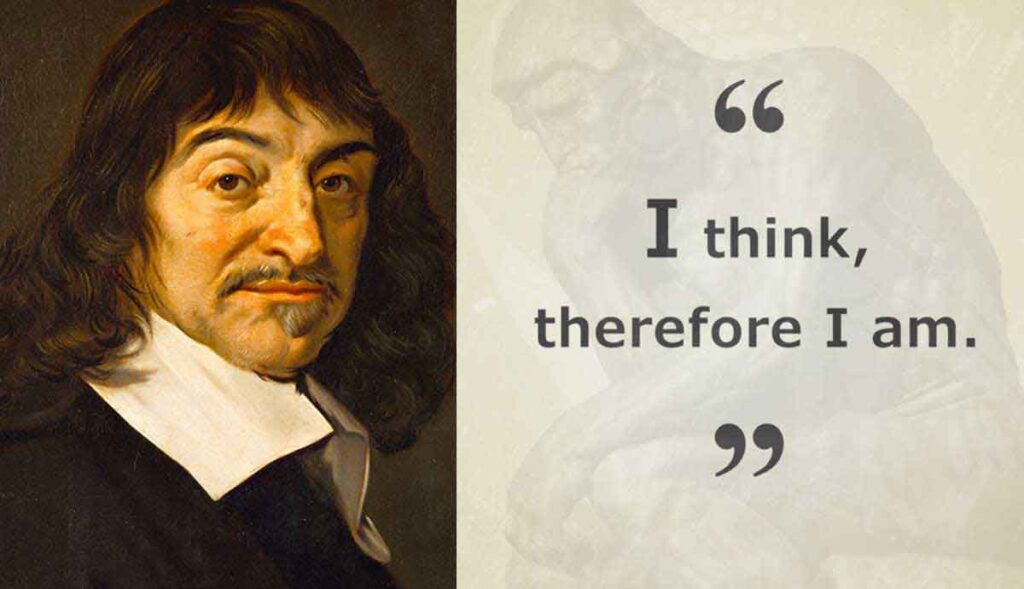
This is where the “I think therefore I am” meme gets real. The depression meme and existential meme versions tap into something deeper – the genuinely difficult experience of questioning your existence and purpose.
The Dark Humor Appeal:
Modern meme culture has embraced dark humor about mental health. The existential crisis meme format lets people joke about their struggles with existence, meaning, and consciousness in a way that’s both funny and cathartic.
Common Formats:
1. The Overthinking Spiral
- First thought: “I’m thinking”
- Second thought: “Therefore I exist”
- Third thought: “But should I?”
- Result: Existential dread
2. The 3 AM Realization
- Brain at 3 AM: “Remember that you exist”
- Me: “Why would you remind me of that?”
- Descartes: “Sorry about the whole consciousness thing”
3. The Depression Humor Twist
- “I think therefore I am”
- “But what if I’d rather not?”
- Caption: Existential crisis activated
4. The Self-Aware Version
- “I’m having thoughts about having thoughts about having thoughts”
- “Descartes, what have you done to me?”
- The infinite regress of self-awareness
Why This Format Resonates:
| Aspect | Why It Connects |
|---|---|
| Relatability | Everyone questions their existence sometimes |
| Catharsis | Humor helps process difficult thoughts |
| Community | Shows you’re not alone in these feelings |
| Intelligence | Makes you feel smart about being sad |
| Honesty | Acknowledges real struggles with meaning |
The consciousness meme becomes a way to discuss genuine philosophical questions about existence without being too heavy. It’s saying “yes, existing is weird and sometimes hard, and that’s okay to laugh about.”
TikTok and Twitter Versions:
Philosophy TikTok has created an entire ecosystem around these deep thoughts memes:
- Videos of people realizing they’re conscious
- Jokes about regretting gaining awareness
- Skits about Descartes apologizing for making us think
- Animations showing the moment of existential realization
The viral content aspect means these memes evolve constantly. What started as simple image macros has become sophisticated video content, animations, and multi-part storytelling.
Why This Philosophy Meme Went Viral
Relatability Factor
The “I think therefore I am” meme went viral because it captures a genuinely universal human experience: the weird, unsettling, sometimes funny moment when you become self-aware of your own consciousness.
Universal Experiences That Make This Meme Work:
1. The 3 AM Overthinking Session You’re lying in bed, trying to sleep, and suddenly your brain goes: “Hey, you exist. Isn’t that weird?” Everyone has experienced this. The meme makes these late-night existential thoughts feel less lonely and more laughable.
2. The Random Consciousness Reminder You’re just living your life, and suddenly you’re hit with the thought: “I’m me. I’m experiencing being me right now.” It’s like your brain glitches for a second and you become hyperaware of your own existence. The meme perfectly captures that disorienting feeling.
3. The Depression Reality For people dealing with existential dread or depression, constantly questioning whether anything matters or if you’re “real” is an actual daily struggle. The meme validates that experience while making it more bearable through humor.
4. The Stoner Enlightenment Whether you actually partake or not, everyone understands that stereotypical moment of “whoa, dude, we exist!” The stoner philosophy angle makes deep concepts feel accessible and funny rather than pretentious.
Why Relatability Drives Virality:
When people see these memes, they think: “Oh my God, I’ve had that exact thought!” That recognition drives:
- Shares (“my friends need to see this”)
- Comments (“I thought I was the only one!”)
- Creates (“I’m making my own version”)
- Community (“we’re all questioning existence together”)
The philosophy joke works because it’s not really a joke – it’s a shared experience disguised as humor. The viral philosophy aspect happens because millions of people instantly recognize their own thoughts in the meme.
Internet Culture Connection
The “cogito ergo sum meme” didn’t just randomly go viral – it perfectly aligned with several major internet culture trends:
1. The Rise of Philosophy Content Online
Philosophy TikTok and philosophy Twitter have exploded in recent years. People want:
- Quick, digestible explanations of complex ideas
- Content that makes them feel educated while scrolling
- Ways to discuss deep topics without being boring
- Intellectual humor that’s accessible
The Descartes meme delivered all of this. It’s an instant philosophy lesson wrapped in a joke format.
2. Meta Humor and Self-Awareness
Modern meme culture loves meta-humor – jokes about jokes, being self-aware about being self-aware. “I think therefore I am” is literally about self-awareness, making it perfect meta content.
The meme became layers of awareness:
- You’re aware you exist
- You’re aware that you’re aware
- You’re aware that you’re making a meme about being aware
- You’re aware that others are aware you’re aware…
It’s consciousness humor all the way down.
3. The Wholesome Twist
What makes the René Descartes meme special is how often it’s surprisingly supportive. Instead of mocking someone’s existential crisis, Descartes appears to say “actually, that’s valid evidence!” This unexpected validation made it even more shareable.
Internet Culture Elements:
| Trend | How The Meme Uses It | Why It Works |
|---|---|---|
| Reaction Images | Descartes appearing suddenly | Visual humor + surprise |
| Wholesome Memes | Validating existential thoughts | Feel-good factor |
| Educational Content | Actually teaches philosophy | Combines humor + learning |
| Dark Humor | Existential dread jokes | Relatable struggle |
| Nostalgia | Classic philosophy reference | Feels smart and cultural |
| Animation | Voiceover versions on TikTok | Increases engagement |
| Twitter Threads | Explaining the philosophy | Depth + accessibility |
4. Cross-Platform Evolution
The meme’s success came from how it evolved across platforms:
Twitter: Started as static image comic, became quote tweets and variations TikTok: Transformed into voiceovers, animations, and skits Reddit: Deep-dive discussions on philosophy subreddits Instagram: Visual aesthetic versions and carousel posts YouTube: Explanation videos and animation shorts Pinterest: Quote graphics and aesthetic boards
Each platform added its own twist, creating a viral philosophy phenomenon that transcended any single format.
5. The Accessibility Factor
Unlike many philosophy memes that require background knowledge, “I think therefore I am” is:
- Self-explanatory
- Works without context
- Easy to understand immediately
- Simple to create variations of
- Adaptable to any situation
This accessibility meant anyone could participate in the trend, not just philosophy students. The meme became a gateway to philosophical humor for millions of people who never thought they’d care about Cartesian philosophy.
How to Use This Meme (With Examples)
Ready to join the philosophy meme revolution? Here’s your complete guide to using “I think therefore I am” memes in the wild.
When to Use This Meme:
Perfect Situations:
1. Late Night Thoughts When you or your friends are having those 3 AM existential spirals:
- “Me at 3 AM: I think, therefore I unfortunately am”
- “Brain: Remember you’re conscious. Me: I was having a nice day”
2. Overthinking Moments When someone is spiraling into overthinking territory:
- Friend: “Do you ever think about thinking?”
- You: sends Descartes meme “Congrats on the existential crisis”
3. Self-Awareness Jokes When you want to be funny about being too self-aware:
- “Just remembered I’m a conscious being trapped in a meat suit”
- “Descartes ruined my ability to just exist without questioning it”
4. Depression Humor (with friends who get it) When you’re sharing relatable mental health content:
- “I think therefore I am… unfortunately”
- “Descartes: I think therefore I am. Me with depression: can we revisit this?”
5. Philosophy Discussions When you want to sound smart while being funny:
- Lightening up serious conversations
- Making philosophy accessible
- Showing you understand the reference
How to Create Your Own Versions:
Format Options:
Basic Image Meme:
[Picture of confused person/animal]
Caption: "I think, therefore I am"
Optional: "Why did I have to realize this?"
Dialogue Format:
Person 1: [Question about existence]
Person 2: [Uncertain response]
René Descartes: [Validating their thought process]
Self-Reflection Format:
Brain: [Reminds you that you exist]
Me: [Negative reaction]
Descartes: [Philosophical explanation]
Example Variations You Can Make:
| Situation | Caption | Tone |
|---|---|---|
| Morning coffee | “I drink coffee, therefore I am… barely” | Relatable |
| Exam stress | “I think I’m failing, therefore I am failing” | Dark humor |
| Gaming | “I respawn, therefore I am… back at it” | Playful |
| Work meeting | “I pretend to listen, therefore I am employed” | Sarcastic |
| Social media | “I doom scroll, therefore I am existing poorly” | Self-aware |
Platform-Specific Tips:
Twitter/X:
- Keep it short and punchy
- Use the hashtag #philosophymemes
- Quote tweet for added context
- Thread for longer explanations
TikTok:
- Use trending sounds with Descartes voiceover
- Add text overlays for emphasis
- Film reaction videos
- Create animation versions
Instagram:
- Make it visually aesthetic
- Use carousel posts for the build-up
- Add philosophy quotes to stories
- Create Reels with trending audio
Reddit:
- Post in r/philosophymemes
- Add context in comments
- Engage in discussions
- Share variations you find
Things to Avoid:
Don’t:
- Overexplain the joke (ruins it)
- Use it for serious philosophical debates (wrong context)
- Be pretentious about knowing the reference
- Use it to mock people genuinely struggling
- Spam it (once per conversation max)
Do:
- Keep it light and funny
- Use it to connect with others
- Be self-aware about using it
- Respect the philosophical roots
- Create original variations
Example Conversations:
Scenario 1: Group Chat
Friend 1: "Why am I even awake right now?"
Friend 2: "Good question"
You: *sends I think therefore I am meme*
Friend 1: "NOT HELPING"
You: "Descartes says you're definitely awake though"
Friend 1: "I hate philosophy"
Scenario 2: Social Media Post
Caption: "Having one of those nights where I'm too aware of being conscious"
Comments: [Dozens of "I think therefore I am" references]
Result: Instant community of fellow overthinkers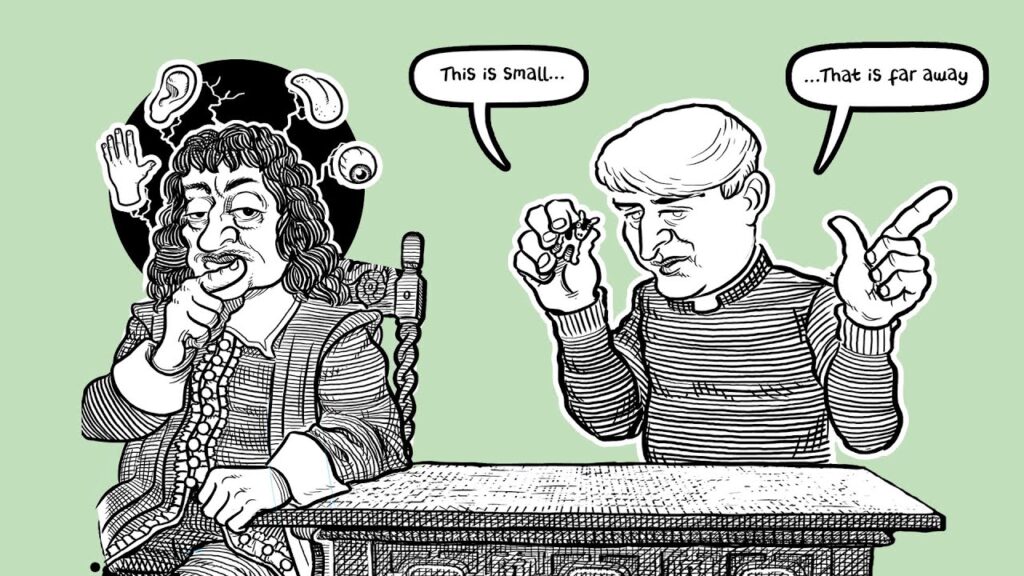
The Real Philosophy Behind the Joke
Let’s get real for a moment. While the “I think therefore I am” meme is hilarious, there’s actually profound philosophical wisdom underneath all the jokes.
What Descartes Was Really Trying to Solve
René Descartes wasn’t making memes in the 1600s (obviously), but he was tackling something that still matters today: How do we know anything is real?
The Big Questions:
1. The Problem of Certainty Descartes wanted to find absolute certainty in a world full of doubt. In his “Meditations on First Philosophy,” he questioned everything:
- Can you trust your senses? (No – dreams feel real)
- Can you trust your memories? (No – false memories exist)
- Can you trust mathematics? (Maybe an evil demon is tricking you)
- Can you trust other people? (Maybe they’re not real)
But even if ALL of that is fake, Descartes realized: The act of doubting proves you exist. You can’t doubt if there’s no “you” to do the doubting.
2. The Mind-Body Problem The cogito ergo sum introduced a massive philosophical question that’s still debated today: If you can be certain your mind exists (because you’re thinking), but you can’t be certain your body exists (because your senses might lie), then what’s the connection between mind and body?
This Cartesian dualism basically created the whole field of philosophy of mind. Every time you wonder “what is consciousness?” you’re dealing with questions Descartes started.
3. The Foundation of Knowledge Descartes was building a philosophical foundation for all knowledge. He wanted something so certain that you could build everything else on top of it. “I think therefore I am” was supposed to be that unshakeable base.
Think of it like this:
Level 5: All other knowledge
Level 4: Scientific truths
Level 3: Mathematical facts
Level 2: Sensory experience
Level 1: I THINK THEREFORE I AM ← The foundation
Why This Actually Matters Today
You might be thinking, “Okay, cool philosophy stuff, but why should I care?” Here’s why this philosophical statement is still relevant:
1. Consciousness and AI As we develop artificial intelligence, we’re facing Descartes’ questions again: When does something become conscious? If an AI says “I think therefore I am,” is it? How do we know? The meme jokes about gaining consciousness, but this is a real question scientists are grappling with.
2. Virtual Reality and Simulation Theory Ever heard the theory that we might be living in a simulation? That’s basically Descartes’ evil demon hypothesis updated for the 21st century. The “I think therefore I am” logic still applies: even if you’re in a simulation, your consciousness experiencing the simulation is real.
3. Mental Health and Identity When people struggle with dissociation, depersonalization, or existential depression, they’re dealing with feelings of unreality – questioning their own existence. Understanding the cogito ergo sum can actually be grounding: your thoughts and feelings, even difficult ones, prove your existence.
4. The Nature of Self Modern neuroscience is revealing that the “self” might be more of a construct than we thought. But Descartes’ point stands: regardless of what the self is, the experience of being a thinking entity is undeniable.
Beyond the Meme: Deep Philosophical Insights
The Beautiful Complexity:
What makes “I think therefore I am” brilliant is its layers:
Layer 1: Simple statement everyone can understand
Layer 2: Proof of your own existence
Layer 3: Foundation for building knowledge
Layer 4: Questions about consciousness and reality
Layer 5: Entire philosophical systems built on this idea
The meme culture version captures Layer 1 and sometimes Layer 2. But understanding the deeper layers makes the meme even better because you realize how profound the original statement actually was.
Modern Philosophical Debates:
Today’s philosophers still argue about the cogito:
| Question | The Debate | Why It Matters |
|---|---|---|
| Does thinking require a “thinker”? | Maybe thoughts exist without a self | Identity and consciousness |
| What counts as “thinking”? | Are feelings thinking? Sensations? | What proves existence |
| Can you doubt you’re doubting? | Meta-level skepticism | Limits of certainty |
| Does this work in other languages? | Language shapes thought differently | Cultural philosophy |
| What about unconscious thoughts? | Do they count as thinking? | Nature of mind |
The Critique Descartes Didn’t See:
Some philosophers point out problems with the cogito:
- It assumes there’s an “I” doing the thinking
- It privileges rational thought over other experiences
- It separates mind from body in unhelpful ways
- It’s very Western/European in perspective
But even the criticisms prove the statement’s importance. You don’t spend 400 years arguing about something that doesn’t matter.
What The Meme Gets Right
Here’s what’s beautiful: The “I think therefore I am” meme actually captures something Descartes would probably appreciate – the universal human experience of self-awareness being both profound and absurd.
The Meme’s Wisdom:
- Acknowledges that consciousness is weird
- Makes philosophy accessible to everyone
- Captures the existential humor of being alive
- Creates community around philosophical questions
- Shows that deep thinking can be funny
When someone shares a Descartes meme, they’re participating in a philosophical tradition that’s centuries old, just in meme format. They’re asking the same questions humans have always asked: “What am I? Why do I exist? Is any of this real?”
The meme makes it okay to ask those questions without being pretentious or depressing. It creates space for existential humor and philosophical humor that actually helps people engage with big ideas.
The Takeaway
“I think therefore I am” works as both a meme and a philosophical insight because it’s:
- Universally relatable
- Immediately understandable
- Infinitely deep when you dig into it
- Both funny and profound
- About the most basic human experience: being aware of yourself
The viral philosophy happened because the internet rediscovered what Descartes knew: there’s something simultaneously obvious and mind-blowing about realizing you exist. The meme just made that realization funny instead of scary.
So next time you see the consciousness meme or make a joke about existential dread, remember: you’re part of a philosophical conversation that started in the 1600s and will probably continue as long as humans (or whatever we become) exist to think about existing.
And that’s actually pretty cool.
Conclusion
The “I think therefore I am” meme is more than just another internet joke – it’s proof that philosophy never really goes out of style. René Descartes probably never imagined his cogito ergo sum would become a viral sensation 400 years later, featuring confused cats, stoner humor, and existential TikToks. But here we are.
What We’ve Learned:
The Descartes meme went viral because it perfectly captures the universal human experience of self-awareness – that weird, funny, sometimes uncomfortable moment when you realize you’re conscious and existing. Whether it’s formatted as a stoner meme, a cat meme, or depression humor, the core idea remains powerful: thinking about your existence proves your existence.
Why This Matters:
This isn’t just about memes. The “I think therefore I am” phenomenon shows us that:
- People are hungry for philosophical content that’s accessible
- Meme culture can make complex ideas relatable
- Existential humor helps us process difficult questions
- Philosophy doesn’t have to be boring or pretentious
- The internet creates unexpected communities around deep thinking
The Evolution Continues:
The philosophy meme landscape keeps evolving. What started as a simple webcomic on Twitter has spawned thousands of variations, animations, TikToks, and discussions. Each new version adds something to the conversation, keeping a 400-year-old philosophical statement fresh and relevant.
Your Part in the Story:
Now you understand the real philosophy behind the joke. You know why “cogito ergo sum” became a meme, how to use it, and what makes it meaningful beyond the laughs. Whether you’re sharing it to connect with friends, process your own existential thoughts, or just make someone smile, you’re participating in a tradition of questioning, thinking, and being self-aware about our existence.
The Final Thought:
Maybe the real genius of the “I think therefore I am” meme is that it makes philosophy accessible to everyone. You don’t need a degree to get the joke. You just need to have experienced that weird moment of realizing you’re conscious – and if you’re reading this, you definitely have.
So the next time you’re up at 3 AM questioning your existence, or you see a confused cat staring into space, or your friend has a stoner epiphany about consciousness – remember Descartes. He started this whole thing by trying to find certainty in an uncertain world. The fact that we’ve turned his solution into memes is honestly the most human response possible.